


How the Right Wood Stainer Impacts Final Finish
Choosing the right wood stainer can completely transform your furniture. The right stain enhances natural grain, improves durability, and elevates the final finish. However, the wrong choice can lead to uneven color, poor absorption, and costly rework. Therefore, you must understand how wood stains work, how they differ, and how you can select the perfect one for your furniture project.
In this complete guide, you will learn how to compare types, evaluate wood species, match finishes, and apply stain like a professional. Moreover, you will discover expert tips that help your furniture look rich, smooth, and long-lasting.
What is a Wood Stainer?
Wood Stainer is a specially formulated liquid or gel used to add color to wooden surfaces while enhancing the natural grain pattern. Unlike paint, which covers the surface completely, wood stain penetrates into the wood fibers. As a result, it highlights the texture and beauty of the wood instead of hiding it.
Why Wood Stainer Matters for Furniture Projects

Furniture does more than fill space. It reflects taste, quality, and craftsmanship. Therefore, selecting the right stain becomes a critical step in finishing.
Enhances Natural Wood Grain
A high-quality stain penetrates deeply into the wood surface. As a result, it highlights grain patterns instead of hiding them. Oak looks bold and textured. Teak appears warm and luxurious. Meanwhile, pine becomes more uniform and attractive.
Improves Durability and Protection
While stain mainly adds color, it also supports surface protection when paired with the right topcoat. Consequently, furniture resists moisture, mild scratches, and daily wear better.
Creates Consistent and Rich Color
When you choose correctly, you achieve even tone distribution. In contrast, poor selection often causes patchiness. Therefore, always test before final application.
Types of Wood Stain You Should Know
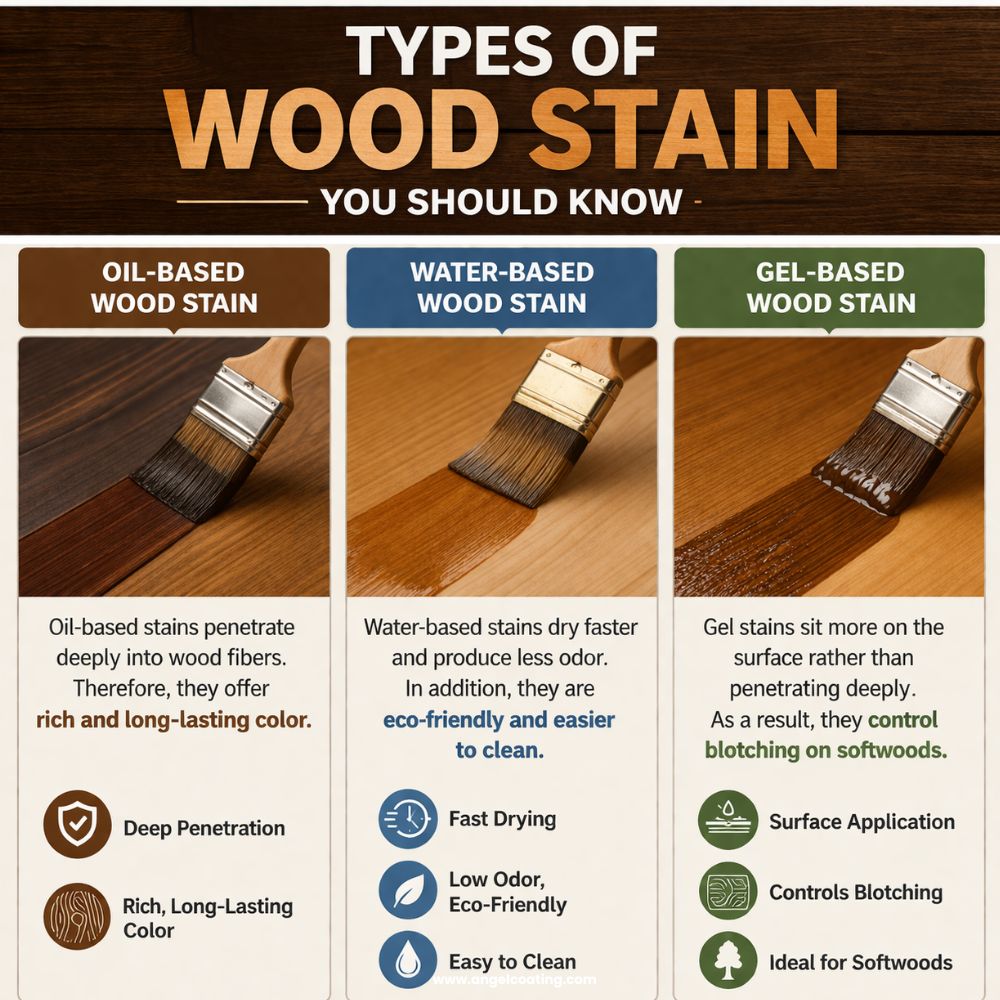
Before selecting a product, understand the main categories available in the market. Each type performs differently.
Oil-Based Wood Stainer
Oil-based stains penetrate deeply into wood fibers. Therefore, they offer rich and long-lasting color.
Advantages:
- Deep penetration
- Longer working time
- Smooth blending
Best for: Solid wood furniture, traditional finishes, interior pieces
However, the drying time is slightly longer. So, plan your schedule accordingly.
Water-Based Wood Stain
Water-based stains dry faster and produce less odor. In addition, they are eco-friendly and easier to clean.
Advantages:
- Quick drying
- Low VOC
- Easy maintenance
Best for: Indoor furniture, fast production cycles, modern workshops
However, they may raise the grain slightly. Therefore, light sanding after the first coat improves smoothness.
Gel-Based Wood Stainer
Gel stains sit more on the surface rather than penetrating deeply. As a result, they control blotching on softwoods.
Advantages:
- Better control
- Ideal for vertical surfaces
- Reduced drips
Best for: pine, veneer, and MDF furniture
How to Choose the Best Wood Stainer for Furniture
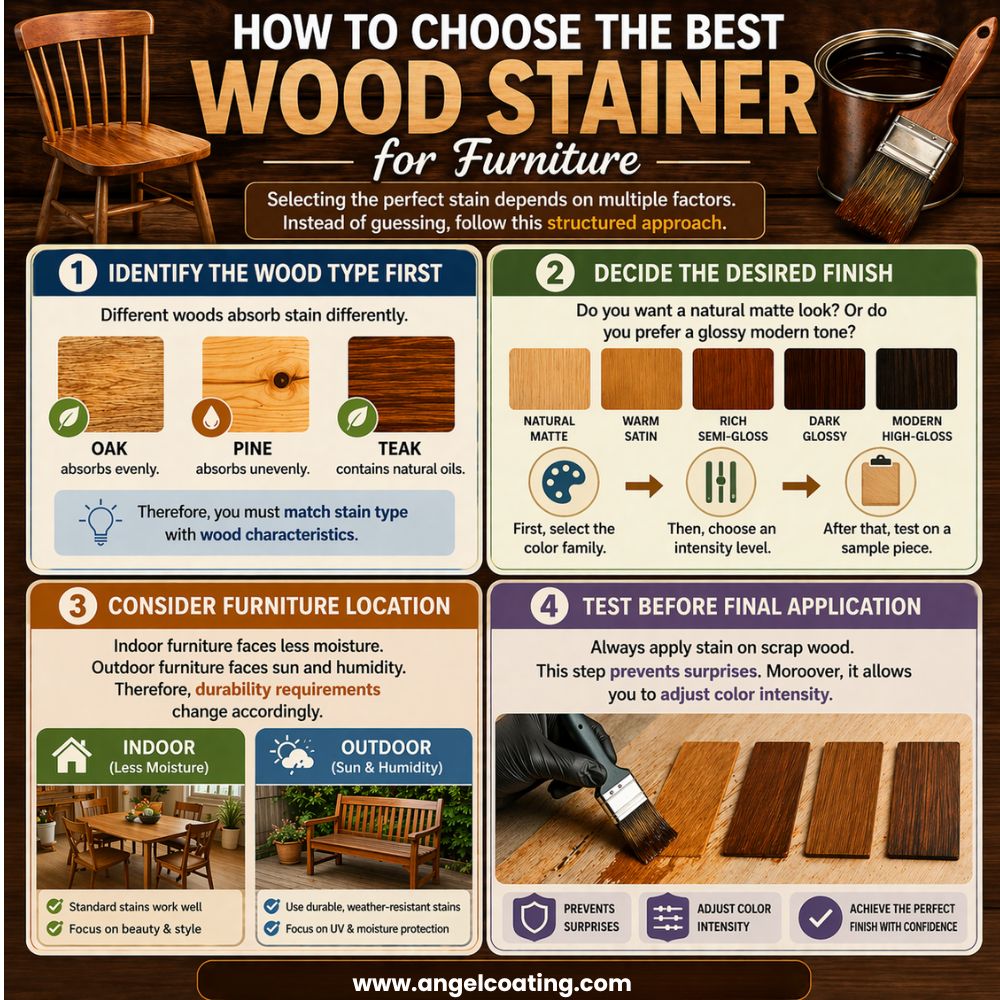
Selecting the perfect stain depends on multiple factors. Instead of guessing, follow this structured approach.
Identify the Wood Type First
Different woods absorb stain differently.
- Oak absorbs evenly.
- Pine absorbs unevenly.
- Teak contains natural oils.
Therefore, you must match stain type with wood characteristics.
Decide the Desired Finish
Do you want a natural matte look? Or do you prefer a glossy modern tone?
First, select the color family. Then, choose an intensity level. After that, test on a sample piece.
Consider furniture location
Indoor furniture faces less moisture. Outdoor furniture faces sun and humidity. Therefore, durability requirements change accordingly.
Test Before Final Application
Always apply stain on scrap wood. This step prevents surprises. Moreover, it allows you to adjust color intensity.
Wood Preparation Before Applying Wood Stain
Preparation determines final appearance. Even the best stain cannot fix poor preparation.
Sand the Surface Properly
Start with medium-grit sandpaper. Then, finish with fine grit for smoothness. Sand along the grain’s direction.
Remove Dust Completely
Use a vacuum or clean cloth. Dust blocks stain penetration. Therefore, never skip cleaning.
Apply Wood Conditioner (If Needed)
Softwoods often absorb unevenly. Therefore, applying a pre-stain conditioner ensures balanced color.
Step-by-Step Guide to Using Wood Stainer

Now let’s move to application. Follow this professional method.
Step 1: Stir the Stain Well
Do not shake the container. Instead, stir gently. This action keeps pigments evenly distributed.
Step 2: Apply Evenly
Use a brush, cloth, or spray gun. Apply in long strokes along the grain. Work section by section.
Step 3: Wipe Excess Quickly
After a few minutes, wipe off excess stains. This technique controls darkness and prevents stickiness.
Step 4: Allow Proper Drying Time
Follow manufacturer guidelines. Rushing this step can ruin the finish.
Step 5: Apply Protective Topcoat
Seal with PU, melamine, or lacquer finish. Protection enhances durability significantly.
Why Professional-Grade Wood Stainer Makes a Difference
Quality products ensure consistent pigmentation, smooth application, and long-lasting color stability. Moreover, premium stains reduce rework and save labor costs.
Manufacturers who focus on advanced formulation provide better coverage and stronger adhesion. Therefore, always choose trusted brands known for performance and reliability.
Transform Furniture with the Right Wood Stain
Choosing the right wood stainer is not just about color. It is about compatibility, durability, preparation, and technique. When you evaluate wood type, select the right base, prepare properly, and apply carefully, you achieve professional results.
Moreover, smart selection reduces mistakes, saves cost, and increases furniture value. Therefore, invest time in choosing wisely. Test before applying. Seal after staining. Maintain regularly.
If you follow this structured approach, your furniture will stand out with rich color, smooth texture, and long-lasting performance.
For any query about, you can contact us on +91-9429002704 or mail us at info@angelcoating.com. Also You can see our products on Angel Coating Pvt. Ltd.