

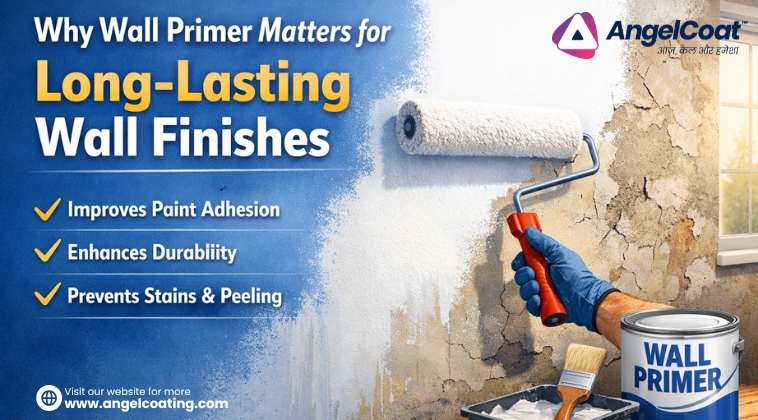
How to Choose the Right Wall Primer for a Perfect Finish
When homeowners invest in painting their property, they expect vibrant colors, smooth textures, and a finish that lasts for years. However, many people overlook one critical step that determines whether paint will perform beautifully or fail prematurely—wall primer.
If you want crack-free walls, rich color depth, and long-term durability, you must start with the right base. In fact, professional painters never skip primer because they understand that paint alone cannot deliver a flawless and long-lasting finish.
In this comprehensive guide, you’ll discover why wall primers play a vital role in every painting project, how they improve paint performance, and how you can choose the best primer for your walls.
What is Wall Primer?
Wall primer is a preparatory coating applied before paint. It creates a stable, uniform surface that allows paint to adhere properly and perform better.
Without primer, paint often absorbs unevenly. As a result, the finish may look patchy. Moreover, stains can bleed through, and paint may peel within months.
How Wall Primer Improves Paint Adhesion
Paint needs a surface it can grip. Raw plaster, cement, drywall, or previously painted walls may not provide ideal adhesion. However, primer forms a bonding layer between the wall and the paint.
Because primer seals porous surfaces, paint spreads evenly. Consequently, fewer coats are required, and the final finish looks smooth and professional.
How Primer Seals Porous Surfaces Effectively
New walls are highly porous. They absorb moisture quickly, and if paint is applied directly, it gets soaked unevenly. This leads to dull patches and inconsistent sheen.
When primer is applied, pores are sealed. Therefore, the paint sits on the surface instead of getting absorbed. This results in:
- Better coverage
- Uniform color appearance
- Enhanced durability
Why Skipping Wall Primer Can Cost You More
At first glance, skipping primer may seem like a cost-saving move. However, in reality, it increases expenses.
Without primer:
- Extra paint coats become necessary
- Paint may peel early
- Surface repairs become frequent
Eventually, repainting becomes unavoidable. Therefore, primer saves money in the long run by increasing paint life.
Key Benefits of Using Wall Primer for Long-Lasting Results
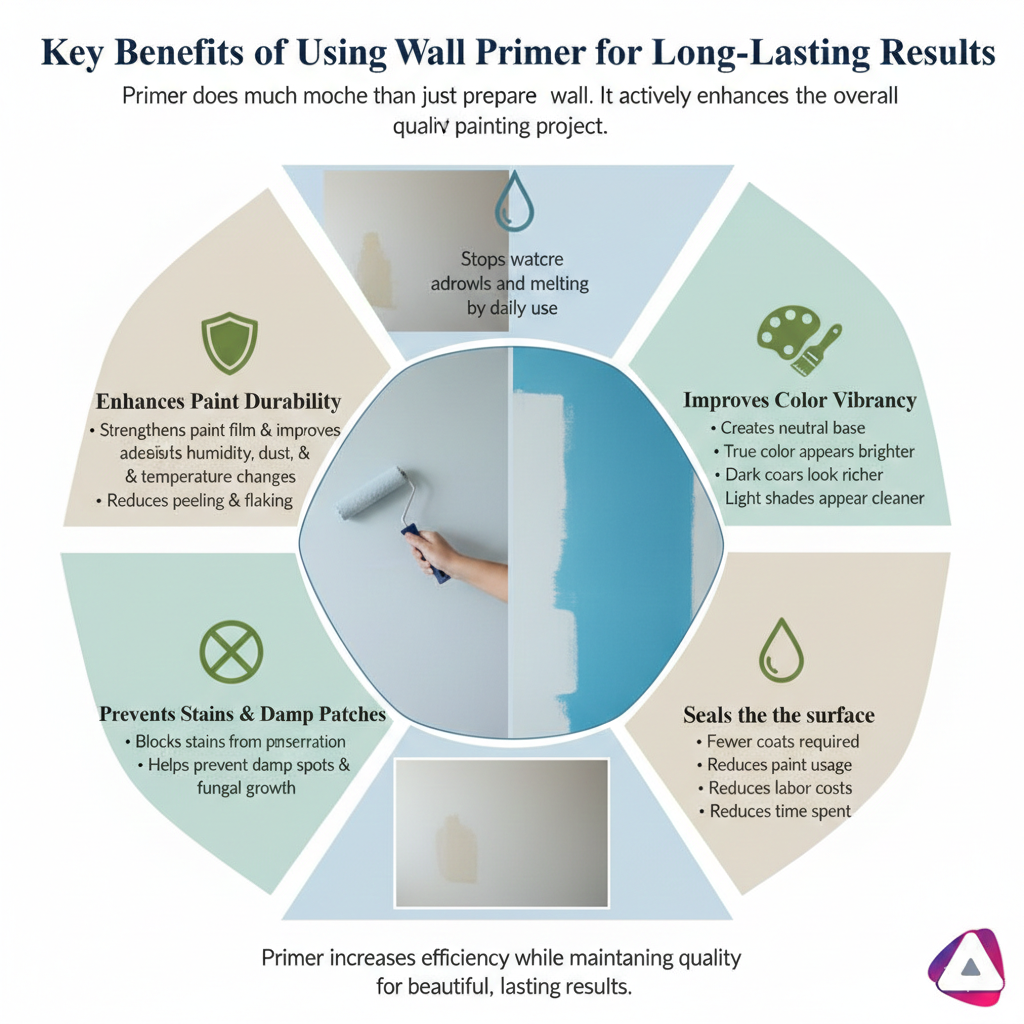
Primer does much more than just prepare the wall. It actively enhances the overall quality of the painting project.
1. Wall Primer Enhances Paint Durability
Primer strengthens the paint film. Because it improves adhesion, the paint layer remains intact for years. Walls are exposed to humidity, dust, and temperature changes. However, a properly primed surface withstands these factors much better.
Poor surface preparation often causes peeling and flaking. When primer is applied correctly, such issues are significantly reduced.
2. Wall Primer Improves Color Vibrancy
Have you ever noticed that some painted walls look dull even when premium paint is used?
That happens because the base surface absorbs pigment unevenly. However, primer creates a neutral base. Therefore, the true color of the paint appears brighter and more vibrant.
Dark colors look richer. Light shades appear cleaner. As a result, the final finish looks exactly as expected.
3. Wall Primer Prevents Stains and Damp Patches
Stains from water leaks, smoke, or old paint can bleed through fresh coats. Primer blocks these stains effectively.
Additionally, certain primers resist moisture penetration. Because of this, they help prevent damp spots and fungal growth in humid areas.
4. Wall Primer Reduces Overall Paint Consumption
When the primer seals the surface, paint spreads efficiently. Consequently, fewer coats are required to achieve full coverage.
This reduces:
- Paint usage
- Labor costs
- Time spent on application
Therefore, primer increases efficiency while maintaining quality.
Types of Wall Primer and How to Choose the Right One
Not all primers are the same. Choosing the right type ensures optimal performance.
Water-Based Wall Primer
Water-based primers are ideal for interior walls. They dry quickly and emit low odor. Moreover, they are environmentally friendly.
They work best for:
- New plaster walls
- Drywall
- Light repainting projects
Oil-Based Wall Primer
Oil-based primers provide strong stain-blocking properties. They are often used for surfaces with heavy stains or smoke damage.
However, they take longer to dry and may produce strong fumes.
Acrylic Wall Primer
Acrylic primers offer excellent durability and flexibility. They resist cracking and perform well in humid environments. Because of their strong bonding properties, they are widely used in residential and commercial projects.
Step-by-Step Guide to Applying Wall Primer Correctly
Applying primer correctly ensures maximum benefits. Therefore, follow these essential steps.
Surface Preparation Before Applying Wall Primer
Before applying primer:
- Clean the wall thoroughly.
- Remove dust and grease
- Repair cracks and holes
- Sand uneven areas
If the surface is not cleaned properly, adhesion may be affected.
Applying the Primer Evenly
Use a roller for large surfaces and a brush for corners. Apply a uniform coat without overloading the roller.
Allow the primer to dry completely before painting. Usually, drying time ranges from 4 to 8 hours depending on the product.
Sanding After Primer (If Required)
In some cases, light sanding is recommended after the primer dries. This ensures a smoother paint finish.
Dust must be removed before applying paint.
Why Professionals Never Skip Wall Primer
Professional painters understand surface chemistry. They know that long-lasting finishes depend on proper preparation.
Because primer improves adhesion, professionals rely on it to deliver guaranteed results. Moreover, it minimizes callbacks and repainting issues.
In high-quality residential projects, primer is always included as a standard step.
Wall Primer for Interior vs. Exterior Surfaces
Different surfaces require specific primer types.
Interior Wall Primer Applications
Interior primers focus on smoothness and stain blocking. They are designed for low odor and fast drying.
Exterior Wall Primer Applications
Exterior walls face sunlight, rain, and temperature changes. Therefore, exterior primers offer stronger resistance and durability.
UV resistance and moisture control become crucial in such cases.
Signs Your Walls Need Primer Before Repainting
If you notice the following signs, primer is necessary:
- Uneven patches
- Chalky surface
- Visible stains
- Peeling paint
- Drastic color change
In these situations, primer restores surface stability.
Final Thoughts: Why Wall Primer Is a Smart Investment
Wall primer is not an optional step. It is the foundation of every successful painting project.
Because it seals surfaces, improves adhesion, enhances durability, and reduces paint consumption, it plays a crucial role in long-lasting wall finishes.
Skipping primer may save money initially. However, it increases long-term costs and compromises quality.
If you want vibrant colors, crack-free surfaces, and professional results, always start with the right wall primer. The strength of your paint depends on the strength of your base.
For any query about, you can contact us on +91-9429002704 or mail us at info@angelcoating.com. Also You can see our products on Angel Coating Pvt. Ltd.